Begin at the sink
A cutting board can feel generous when the onions are spread across it and faintly absurd when it will not fit beneath the faucet. That second moment belongs in the buying decision. The board has to come off the counter, get clean, dry completely, and return somewhere that does not require moving the toaster and three bottles of oil.
Measure the clear counter, the sink basin, the dishwasher opening if the maker allows machine washing, and the place where the board will dry on edge. Then lift something with roughly the dimensions you are considering. A large surface is excellent for keeping chopped food out of the knife path; a board you avoid washing is excellent for nothing.
Maple gives you mass and a renewable surface
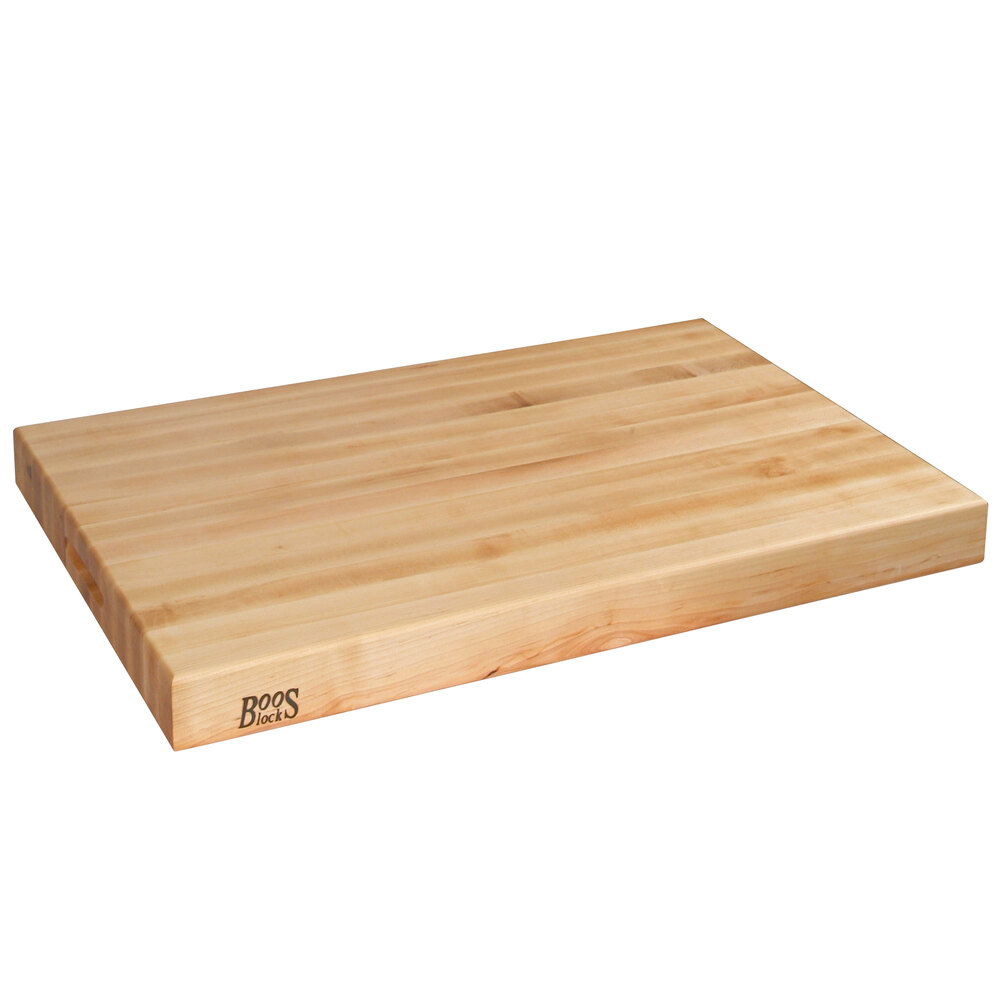
A thick edge-grain maple board settles onto the counter and gives long knife work a broad, steady stage. Edge grain means the long side of the wood fibers faces upward; end grain exposes their ends. The construction changes appearance, cost, movement, and how a maker permits the surface to be renewed. The species name alone does not describe the board.
Wood asks for a routine. John Boos tells owners to hand-wash its wood boards with mild soap and water, dry them promptly, stand them on edge, and apply its approved oil to all surfaces on a schedule adjusted for use and household conditions. Its care guidance also describes sanding a worn surface with the grain before re-oiling. Follow the instructions for the exact board and finish rather than borrowing a care ritual from a different piece of wood.
Paper composite changes the cleanup
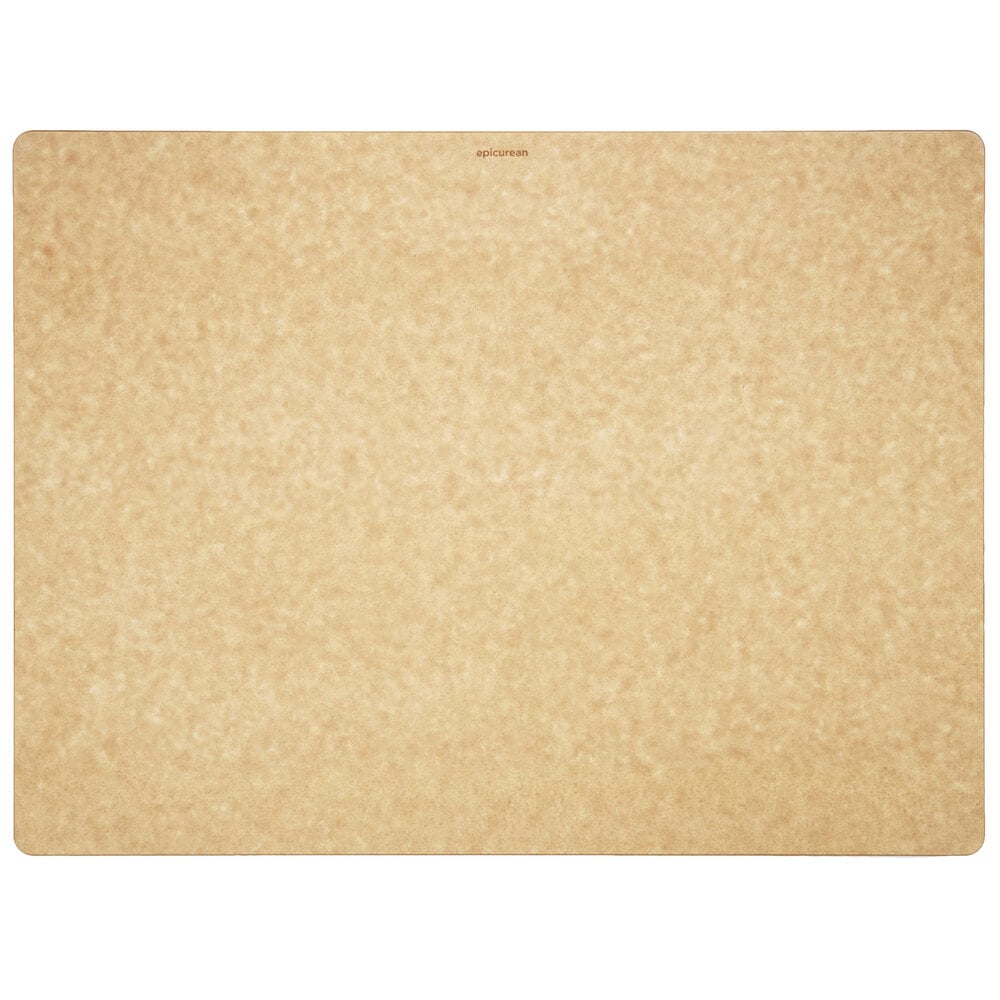
Paper-composite boards are made by pressing paper or wood fiber with resin into a dense sheet. That is not the same thing as a solid plank, a plastic board, or a claim that the material is free of polymers. The useful questions are more ordinary: Is this exact model approved for a dishwasher? Does it have feet? Can both faces be used? How should it be dried and stored?
The Epicurean Big Block model linked below is a one-inch Richlite board. Its supplier identifies it as reversible, NSF certified, fitted with silicone feet, and safe for a commercial dishwasher. The supplier also warns that the composite can warp if it remains wet or is stored in damp conditions, so it should dry thoroughly on edge. Dishwasher-safe does not mean leave-it-flat-in-a-puddle safe.
Food safety is a cleaning system, not a material halo
Current USDA guidance allows either wood or a nonporous cutting surface. It recommends a separate board for fresh produce and bread and another for raw meat, poultry, and seafood, reducing the chance that raw-food bacteria reach something that will not be cooked. Wash after each use, rinse, and dry; sanitize when the task calls for it using the current USDA directions.
Inspect the surface under good light. Deep cuts, lifted layers, cracks, loose feet, persistent odors, and hard-to-clean grooves are not character. USDA says excessively worn boards or boards with grooves that cannot be cleaned should be discarded. A handsome material cannot rescue a surface you can no longer wash properly.
Keep the board still and the edge out of trouble
A board that skates across the counter is the wrong board for that counter until it is stabilized. Use the maker’s feet or a clean, suitable nonslip mat that can be washed and dried. Check stability again when the surface is wet. Keep towels, cords, pan handles, and the board’s own hand grips out of the knife path.
Glass, stone, and metal may be easy to wipe, but their hardness changes edge contact, sound, and control. Whatever material you choose, use a knife appropriate to the food, avoid twisting a thin edge in dense ingredients, and maintain the edge before extra force begins to feel normal. The board and knife are one working system; they meet several thousand times before dinner.
Two large-format reference points
The John Boos RA06 is a substantial maple reference: the supplier lists a 30-by-23-inch, 2¼-inch-thick reversible edge-grain board with side grips and a beeswax finish. The Epicurean Big Block is the easier-cleaning comparison at 23 by 19 inches and one inch thick, made from resin-infused Richlite paper fiber with silicone feet. The supplier identifies both as NSF certified and made in the United States. These are supplier specifications, not Cook Curated test results or a claim that either size belongs in every kitchen.
WebstaurantStore presented the Boos board as usually shipping in one business day and the Epicurean as a manufacturer-shipped item with variable lead time when checked September 29, 2026. Final price, stock, lead time, shipping eligibility, return terms, and checkout conditions are confirmed on the retailer’s page. These are affiliate links, so Cook Curated may earn a commission from a qualifying purchase at no added cost to you.
Choose the care you will repeat
If you have counter space, a sink that can take it, and no objection to hand-washing and oiling, a thick maple board can become the center of the prep area. If the board must move after every meal or the dishwasher is part of the kitchen’s sanitation routine, a model-specific dishwasher-safe composite may be the more realistic choice.
Start with the board already in the kitchen. Clean it, dry it, inspect it, and make it stable. If it is sound and fits the work, keep using it. If it has become too damaged to clean or too awkward to maintain, you now know which problem the next board needs to solve.