Two thermometers, two different questions
A pan can be hot enough to sear while the thickest part of dinner remains cool. The reverse can happen too: a roast may be ready while the griddle beside it has lost enough heat to make the next batch pale. Temperature is useful only after you decide where you are measuring it.
An infrared thermometer reads the surface in its field of view. A probe reads at the point where its sensing area is inserted. The laser dot on an infrared tool feels authoritative, but it is still asking only about the surface. Neither tool becomes the other because the number looks precise.
Use infrared for the cooking surface
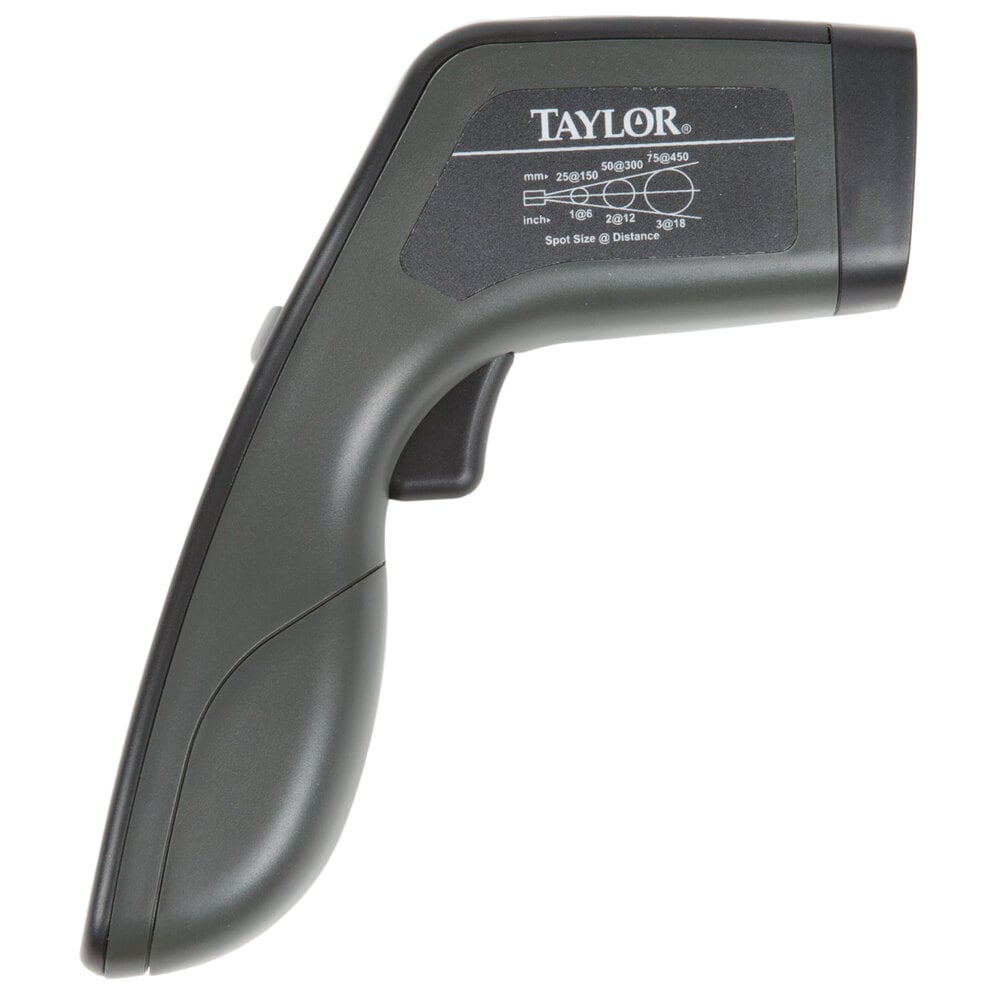
Infrared is useful for checking a pizza stone or steel, mapping hotter and cooler parts of a griddle, comparing zones on a cast-iron pan, and seeing how a cooking surface recovers between batches. Keep the maker's stated temperature range and distance-to-spot ratio in view. As you move farther away, the measured area grows; the reading is not necessarily the temperature of the tiny laser dot alone.
Surface material matters. Shiny or reflective metal, steam, smoke, and measuring through glass can mislead an infrared instrument. Follow its instructions about distance, emissivity, aiming, and environmental limits. When a bare pan needs gentler temperature control, combine the reading with ordinary evidence: the behavior of the oil, the sound of the food, and the heat limits of the cookware.
Use a probe for the food
A probe belongs in the thickest part of the food, away from bone, gristle, and large pockets of fat unless the recipe or current safety guidance says otherwise. For thin food, inserting from the side can put more of the sensing area where the measurement matters. Large or irregular pieces deserve checks in more than one place.
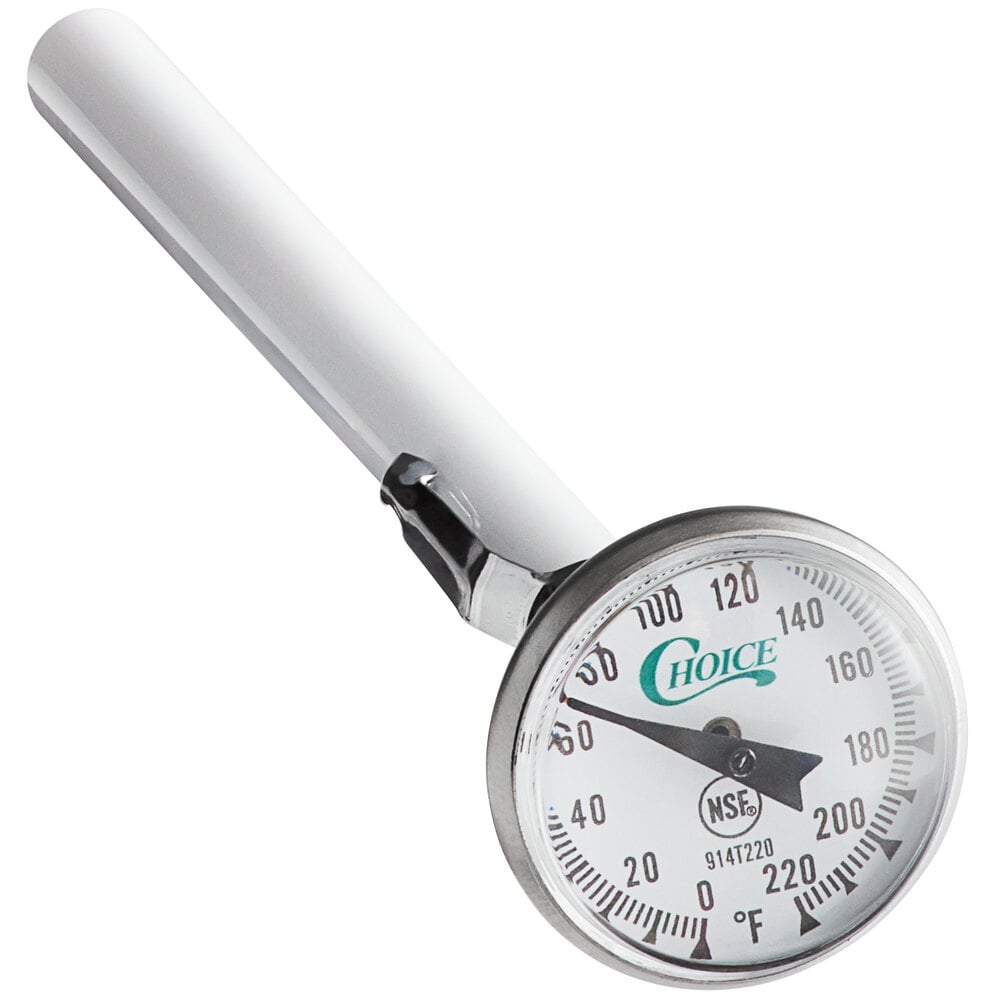
Check where the particular thermometer senses temperature: some read at the tip, while a dial model may average along a marked section of the stem. Speed, probe thickness, readable range, accuracy statement, calibration method, water resistance, and cleaning instructions all affect whether a thermometer suits the work. An instant-read probe, a leave-in oven probe, and a pocket dial are different tools even when the listings use the same broad word.
For food safety, internal means internal
Use a probe and the current safe-minimum-temperature table for meat, poultry, seafood, egg dishes, casseroles, and reheated leftovers. The required rest time is part of a temperature rule when one is specified. Color, juices, cooking time, a hot pan, or an infrared surface reading cannot confirm the internal temperature.
Clean and sanitize the probe according to its instructions between raw and cooked food and between checks that could spread contamination. If you are following a validated preservation method, use the thermometer type, placement, process, and target that method requires rather than substituting a convenient surface reading.
Where both tools earn a place
For pizza, infrared can tell you whether the deck has recovered before the next pie; the dough, toppings, and oven still need the cues and timing of a sound recipe. At the grill, infrared can help map the grate or plancha while a probe checks the food. At the stove, the surface reading can make repeatable batches easier, while the probe answers the safety question inside a thick piece of meat or fish.
Around live fire, keep both tools within their stated operating limits and your hands outside the heat path. A number does not replace a stable coal bed, adequate ventilation, heat-safe cookware, or a plan for extinguishing the fire. It simply gives one part of the work a name.
Two current reference points
The Taylor 9523 infrared thermometer is a current surface-reading reference. Its supplier lists a -49 to 750°F range, one-second response, 6:1 distance-to-spot ratio, and scan-and-hold functions. The Choice 5-inch pocket dial is a simple probe reference; its supplier lists a 0 to 220°F range, stated ±2°F accuracy, a 5-inch stainless-steel stem, and recalibration capability. These are supplier specifications, not Cook Curated test results.
WebstaurantStore presented both items as available when checked on September 25, 2026. Final price, stock, shipping eligibility, return terms, and checkout conditions are confirmed on the retailer's page. Product links are affiliate links, so Cook Curated may earn a commission from a qualifying purchase at no added cost to you.
Buy the missing measurement
Before buying, use the thermometer already in the drawer and check it as its maker directs. If you cannot safely verify internal food temperature, a suitable probe is the first gap to close. Add infrared when surface temperature would make a repeated job—pizza, griddle work, live-fire zones, or pan recovery—clearer and more consistent.
Choose the smallest set of tools that answers the questions you actually ask. A thermometer should reduce guessing, not create a new ceremony between you and dinner.