The shortlist
We compared published specifications and care instructions with the job each item needs to do. These are research-based assessments, not hands-on test results. Each pick links to its source; sellers show current prices and availability.
01 · One person, a small packing footprint
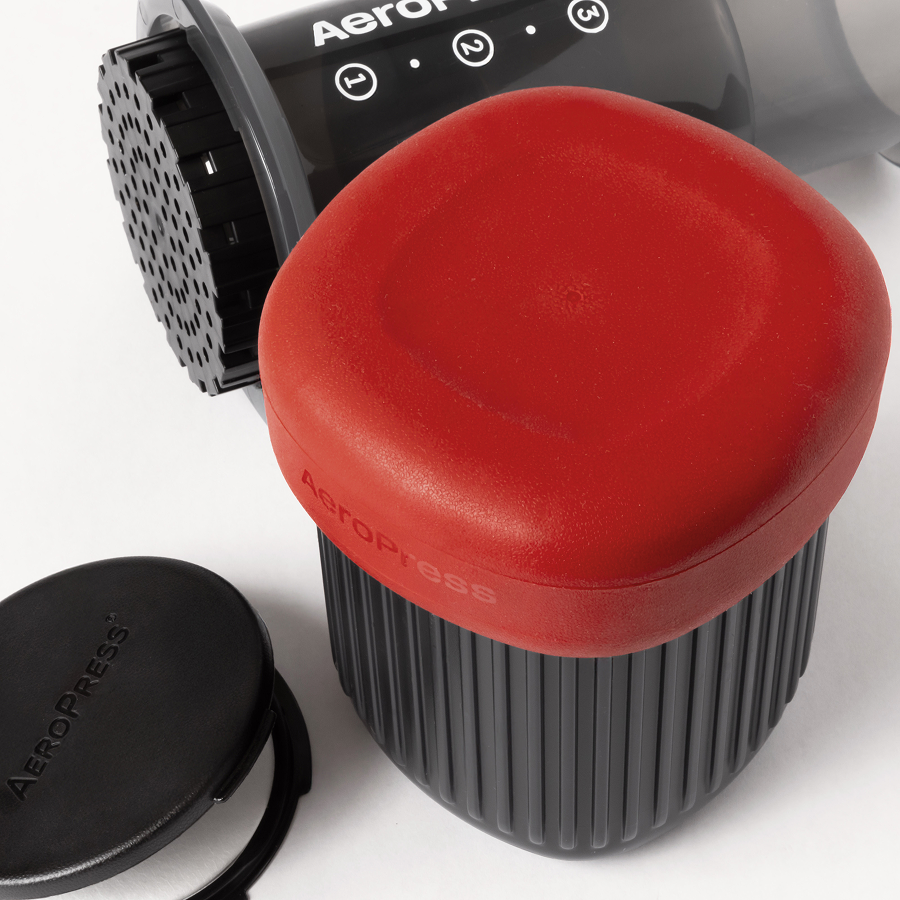
AeroPress Go
The Go packs into its own mug, with a filter holder to keep the smaller pieces together. It combines immersion brewing with a paper-filtered press; AeroPress lists an 8-ounce capacity. That makes it a compact option for a personal cup.
The tradeoff: Serving several people means repeated brewing. It needs the correct filters and a stable surface for pressing. Espresso-style coffee from this brewer is not the same process as pump espresso.
Read the maker’s specifications ↗02 · A familiar pour-over routine outdoors
Hario Outdoor V60 Metal Dripper 02
If you already like pour-over, this keeps the method familiar. Hario specifies an uncoated stainless-steel dripper and removable silicone base. Bring matching paper filters and a stable cup or server underneath; those still have to fit into the bag.
The tradeoff: The dripper is not a kettle. Hario explicitly says it is not for an oven, stove, or open fire. A breezy table and an awkward pouring pot can make technique harder than it is at home.
Read the maker’s specifications ↗03 · Sharing a batch at base camp
GSI Outdoors 30 fl. oz. JavaPress
GSI’s 30-ounce press makes several modest cups in one go. The maker lists a shatter-resistant carafe, insulating cozy, and plunger. It suits a group drinking together at base camp, where the extra space matters less.
The tradeoff: The larger vessel occupies more space, and wet grounds require a deliberate cleanup plan. This model receives hot water; do not assume a plastic carafe or its insulating sleeve can sit on a burner.
Read the maker’s specifications ↗Start with the people waiting for a cup
A small brewer is handy until four people are standing beside it, each hoping the next cup is theirs. Count servings first. For a solo trip, a compact personal brewer may be plenty. For a group, making a batch can leave everyone more time to enjoy the morning.
Lay out everything the method needs: filters, mugs, a water-heating vessel, and somewhere to put wet grounds. That’s the kit you’ll carry and wash. The tidy product photograph may have left a few of those things out.
Make breakfast with it at home
Make coffee at home with the exact camp kit. Pre-portion the coffee if that makes the morning calmer. Practice pouring from the pot you will carry. Store dry filters where condensation and rain will not reach them, and bring a spare serving if the first attempt lands on the ground.
Use potable water and a legal outdoor heat source. Do not put a coffee maker on a flame unless that precise model is made for it. No coffee is improved by melting a handle before sunrise.
The last cup includes cleanup
Carry a small sealed waste container for grounds and paper. Pack food waste out; a used coffee bed does not belong in a stream or scattered around camp. Follow the site’s dishwater and wildlife-storage rules.
Try the brewer you already own before replacing it. If it packs well and makes coffee you like, you may be done. Buy the coffee, find a mug you enjoy holding, and save the rest for the trip.