The news: a chef campaign becomes a purchasing question
On September 23, 2026, Off The Table published a chef letter whose signatories include Francis Mallmann, Alice Waters, Dan Barber, and Josh Niland. The organizers report more than 120 chefs across 26 countries. Their target is ocean-farmed salmon, and their proposed lever is straightforward: stop putting it on menus unless the industry can operate without the harms the letter describes.
This is a campaign coordinated by WildFish, not a new scientific assessment or a government ban. Its significance is the attempt to turn concern about fish farming into purchasing decisions. A signature does not tell us how many portions a restaurant has stopped ordering, what replaced them, or whether its suppliers changed. Those are the results worth following after the announcement.
An open cage shares its water
A marine net pen contains fish while allowing surrounding water to pass through. That exchange supplies oxygen and carries waste away from the fish; it also means the farm is connected to the ecosystem outside the net. The Scottish government’s description of marine finfish farming makes that basic design clear. The environmental question begins with what crosses the boundary, in either direction.
That is why a useful assessment examines several things separately: parasites and disease, escaped fish, chemicals, waste, feed, and effects on surrounding wildlife. A farm can perform better on one measure and poorly on another. Saying that it is regulated answers a question about oversight; it does not, by itself, report the outcome of that oversight.
What the 2026 wild-salmon evidence actually says
Norway’s Scientific Advisory Committee for Atlantic Salmon reports that roughly 456,000 wild salmon returned toward Norway in 2025, including fish subsequently caught. That was an improvement on the record low in 2024, but still one of the six poorest years in a series beginning in the early 1980s. The committee identifies salmon farming and climate change as the greatest threats, with farming contributing substantially to declines in Western and Central Norway.
The geography matters. This is evidence about Norwegian wild Atlantic salmon, not a count of every salmon population on Earth. The same report identifies past overexploitation as the main reason for the endangered condition of the Tana River populations. An accurate story can recognize serious damage associated with farming without pretending every river has the same history or that removing one pressure repairs all the others.
A large mortality number needs its denominator—and its limits
A 2024 study in Scientific Reports assembled records of 865 million farmed-salmon deaths across six producing countries during 2012–2022. The authors found increases in the frequency and scale of the largest loss events in Norway, Canada, and the United Kingdom. Reporting in Chile, Australia, and New Zealand was more aggregated, limiting comparable conclusions about individual events.
That is a substantial animal-welfare and production problem. It is not a claim that 865 million wild salmon were killed by farms, a mortality percentage for your supplier, or a forecast for this year. Keeping those distinctions intact makes the criticism stronger: the real result does not need to borrow a more dramatic one.
Why the recommendations do not line up neatly
NOAA presents U.S.-farmed Atlantic salmon as a responsible seafood choice under U.S. regulation. It also says commercial and recreational fishing for Atlantic salmon in the United States is prohibited, and that Atlantic salmon sold in U.S. seafood markets is farm-raised. That U.S. assessment is not an endorsement of every imported farm or every production system.
Seafood Watch goes more narrowly still. Its recommendation checked on September 27 rates marine-net-pen Atlantic salmon from Norway’s Area 12, West Finnmark, yellow, or Good Alternative. It identifies continuing concerns while assessing local conditions. Off The Table takes a broader position against ocean-farmed salmon. A regional rating and a campaign-wide refusal apply different decision rules; a conscientious buyer should understand which one they are using.
Change the order, not just the adjective
At a restaurant, the useful conversation begins before somebody brings out a wooden board and describes everything as pristine. Ask for the species, production area, and farming or fishing method. A country alone may be too broad to match the fish to a rating. Ask what the supplier can document, rather than expecting the person carrying six plates to deliver a marine-biology seminar.
For a chef, a workable response is to trial a replacement dish, cost it honestly, and write a purchasing specification the supplier can meet. Record the source and volume of the replacement as well as the salmon removed. Otherwise the kitchen may exchange a familiar concern for an undocumented one. If the fish remains on the menu, the same records make its defense more meaningful than a reassuring adjective.
- Identify the exact species and source; keep the invoice or supplier specification.
- Match the production area and method to a current assessment. Save its date and limitations.
- Ask what can be supplied consistently, at the needed price, without treating every wild fish as an automatic improvement.
- Revisit the order when the source changes. A good assessment of yesterday’s fish does not travel with an unrelated delivery.
Dinner can still be the enjoyable part
Replacing a salmon fillet need not mean finding another animal in precisely the same shape. Build the meal around what you can source well: a documented fish, a shellfish dish where appropriate, or beans and vegetables that are allowed to be dinner. A lemony bean pot with bread is a meal, not a failed piece of salmon.
The editorial position here is that a menu should be able to explain its choices. The chef letter creates attention; regional evidence and purchasing records can turn that attention into something more durable. The next interesting story is whether kitchens change their orders, whether suppliers disclose more, and whether conditions in the water improve. A famous signature is the opening scene, not the ending.
Reporting and photograph note
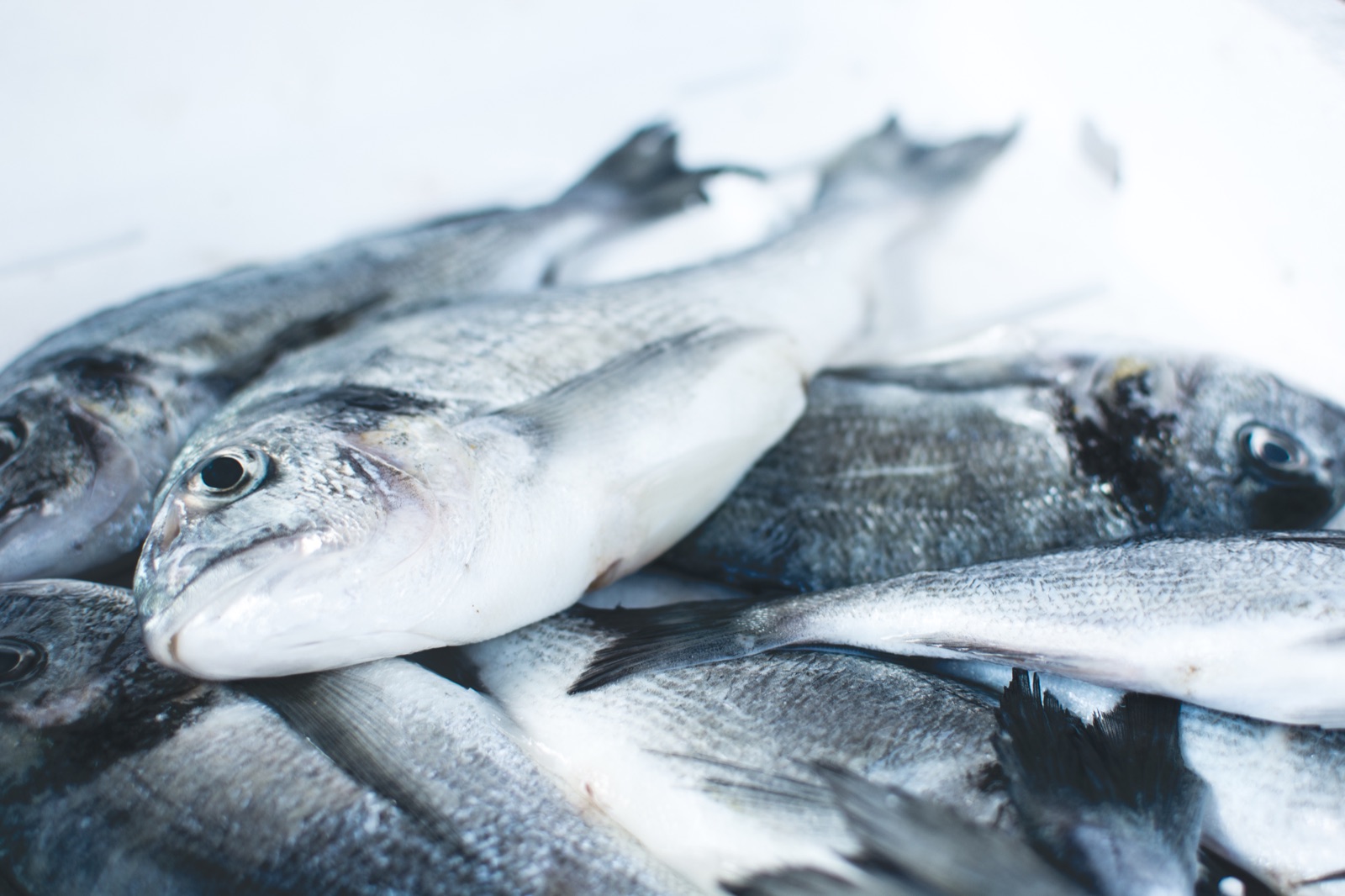
Updated September 27, 2026, using the linked campaign, government, scientific, and assessment sources. This is reported analysis, not an interview-based investigation or a test of a named farm. The photograph shows market fish at Pike Place Market in Seattle; it does not document salmon farming or certify the pictured fish’s sustainability.


