Choose direct contact first, then decide whether a repeater helps
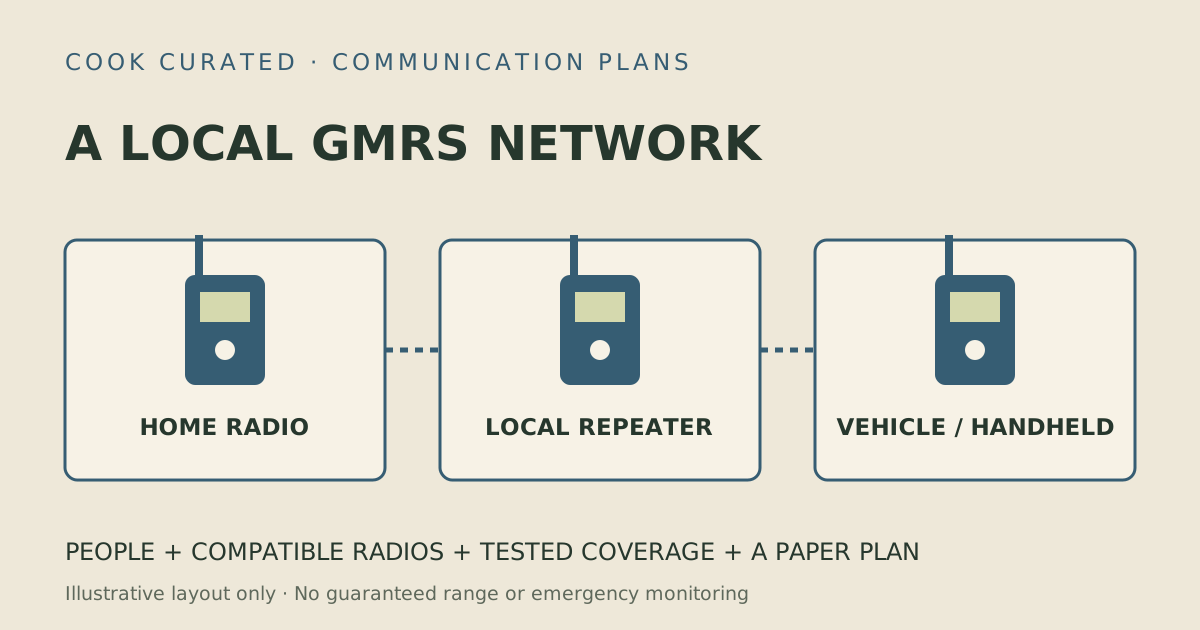
A simplex plan sends a message directly from one radio to another. A repeater receives on one frequency and retransmits on another, which can extend coverage when its site, antennas and power are suitable. It is closer to the idea of a local communication hub, but it is not a cellular tower, an internet hotspot or a promise of service throughout New York.
The diagram shows one local repeater—not a chain of internet-linked repeaters. Each participant needs compatible repeater-capable equipment and usable coverage to that repeater. Certified FRS radios can talk directly to GMRS on shared simplex channels when settings match, but FRS radios cannot use the GMRS repeater input channels.
Visual setup plan
Optional GMRS repeater layout
GMRS base setup + suitable antenna
↔Owner permission + correct settings + backup power
↔Authorized operators + repeater-capable GMRS radios
License the people before distributing GMRS radios
An individual U.S. GMRS license is required for ordinary GMRS operation, subject to the FCC’s defined eligibility and family provisions. No examination is required. One license can cover the licensee’s immediate family as defined in the rule; it does not cover an unrelated friend simply because they are part of the same trip or preparedness group. Friends must have their own applicable authorization before operating GMRS equipment.
Create or sign into the FCC CORES system for your FCC Registration Number, then use the FCC Universal Licensing System to apply for General Mobile Radio Service. Follow the current FCC application and payment instructions rather than a seller’s shortcut. Check the current fee on the FCC site; wait for the license grant and call sign before ordinary operation. Use only official FCC pages for your identity and payment details.
Make repeater permission and settings part of the plan
Find out whether a local repeater exists, whether its owner permits your use, and whether it is maintained and powered for the conditions you are planning around. A listing on a map does not grant permission or establish reliable coverage. Obtain the owner’s channel/frequency pair, tones and operating instructions; program each radio using its own manual.
Midland lists the GXT67 PRO, MXT500 and other specified MicroMobiles as compatible with its MXR10 repeater. That is a manufacturer compatibility statement, not a Cook Curated field test. A repeater purchase alone does not supply a suitable elevated site, exterior antenna, installation approvals, safe feed line, power or maintenance. Confirm exactly what a bundle includes before buying.
Write the network card and label each radio
Keep the settings and required call signs on paper. The FCC requires a GMRS station to identify with its assigned call sign at the end of a single transmission or series, and at least every 15 minutes during a series lasting longer than 15 minutes. Friendly names can make a group easier to understand, but they do not replace required identification.
A tone code is not encryption and does not create a private channel. Keep personal, medical and location details to what is necessary for the communication. If your plan needs a family member who has only an FRS radio, schedule a separate shared simplex contact and test that link. Do not tell them to use the repeater setting.
Test the failure, not only the successful call
Run a calm drill with direct contact, the intended repeater route and the written fallback. Safely simulate the repeater being unavailable by changing to your planned simplex configuration; do not turn off or alter someone else’s equipment. Confirm which stations can still talk directly and which cannot. Record the result instead of assuming extra transmit power will cure it.
Check backup power at the home station, chargers and vehicle. Ask the repeater owner what backup exists; do not assume it has your outage in mind. If contact fails, follow the agreed listening windows and safe meeting plan. Official instructions, shelter decisions and emergency calling remain separate from whether your group can hear you.